Thuringia, often called the “green heart of Germany,” is a state that punches far above its weight. Located in the center of the country, this region is a captivating blend of profound cultural history, breathtaking natural landscapes, and cutting-edge industry. If you’ve ever wondered what Thuringia is known for, the answer is a rich tapestry of poets and thinkers, medieval castles, dense forests, and a world-famous sausage. It is a place where the echoes of Martin Luther and Johann Sebastian Bach meet the precision of modern optics and the thrill of winter sports.
The Cradle of German Culture: Poets, Thinkers, and Reformers
Perhaps Thuringia’s most enduring legacy is its role as the “land of poets and thinkers.” The state is inextricably linked to some of the most influential figures in Western history. The city of Weimar stands at the center of this cultural heritage. It was here that Johann Wolfgang von Goethe and Friedrich Schiller, Germany’s most celebrated literary giants, wrote many of their masterpieces. Their presence, along with that of philosopher Friedrich Nietzsche and painter Lucas Cranach, turned the small ducal court into a powerhouse of the German Enlightenment.
Weimar is also the birthplace of the Bauhaus, the revolutionary art and design school founded by Walter Gropius in 1919. The Bauhaus Museum Weimar today celebrates this legacy, which shaped modern architecture and design worldwide. The city’s significance is so profound that the first German democracy, the Weimar Republic, was named after it because its National Assembly convened here in 1919.
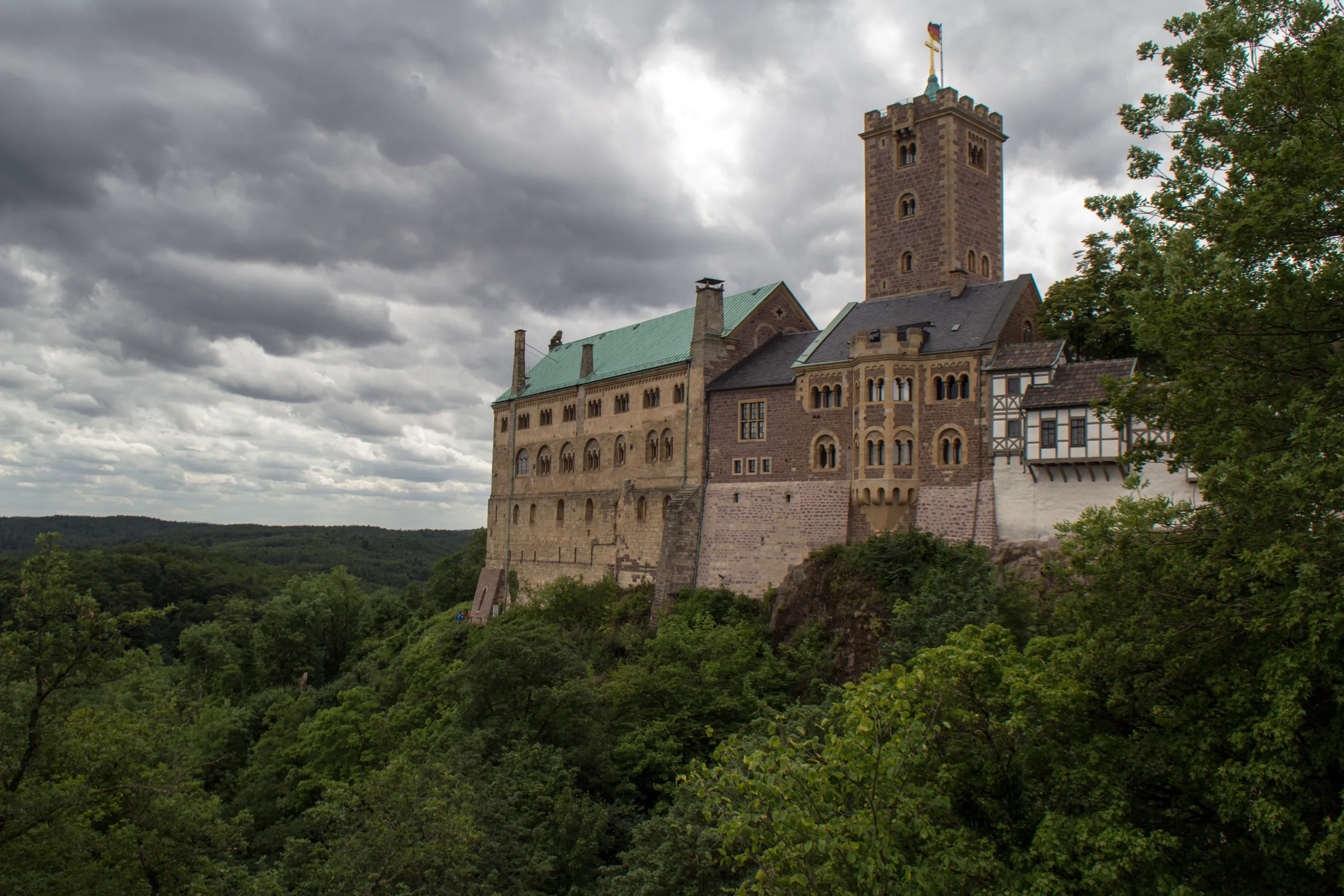
Another pivotal figure in Thuringia’s history is Martin Luther. It was at the Wartburg Castle in Eisenach, a UNESCO World Heritage site, that Luther, while in exile, translated the New Testament into German. This monumental work standardized the German language and had an immeasurable impact on the Protestant Reformation. The castle itself, a 1,000-year-old fortress blending superbly into its forest surroundings, is considered one of Germany’s most important and is a must-visit for anyone exploring the state’s history.
A Land of Enchanted Forests and Historic Towns
Beyond its cultural cities, what Thuringia is known for includes its stunning natural scenery and remarkably well-preserved medieval towns. The Thuringian Forest is a prominent feature, a picturesque range of rounded hills and dense woodlands that has earned the state the nickname “the green heart of Germany”. This region is a paradise for outdoor enthusiasts, crisscrossed by well-marked hiking and cycling trails. The most famous of these is the Rennsteig, a 168-kilometer premium hiking trail that traverses the heart of the forest. The forest’s mystical atmosphere and unspoiled nature have long inspired artists and writers, including Goethe himself.
The state capital, Erfurt, is a gem of medieval architecture. Its most iconic landmark is the Krämerbrücke (Merchants’ Bridge), a 120-meter-long bridge lined with 32 timber-framed houses, making it one of the longest continuously inhabited bridges in Europe. The city’s skyline is dominated by the impressive ensemble of St. Mary’s Cathedral and St. Severi Church, which stand side-by-side on the Domberg. Erfurt is also known as Luther’s university city, adding to its historical significance.
Other notable towns include Eisenach, the birthplace of Johann Sebastian Bach and the home of Wartburg Castle, and Jena, a vibrant university city with a reputation for academic excellence and a thriving student nightlife.
A Culinary Icon: The Thuringian Bratwurst
No discussion of what Thuringia is known for would be complete without mentioning its most famous culinary export: the Thüringer Rostbratwurst. This isn’t just any sausage; it is a cultural icon with protected geographical indication (PGI) status under EU law, meaning only sausages produced in Thuringia following a traditional recipe can bear the name. The recipe, dating back centuries, typically includes marjoram, caraway, and garlic, giving it a distinct, savory flavor. A decree from 1432 even regulated its production, making it one of the oldest documented sausage recipes in Germany. Today, you can enjoy this grilled delicacy at countless stands and restaurants across the state, often served in a crusty roll with a dollop of mustard. The “German Bratwurst Museum” in Mühlhausen is dedicated to celebrating its long and storied history.

A Hub of Innovation and Industry
Despite its image as a bucolic and historical region, Thuringia is a modern economic powerhouse with a highly diversified industrial base. The state is particularly renowned for its high-tech sectors. The city of Jena is a global leader in optics and photonics, home to world-famous companies like Carl Zeiss and Jenoptik. The region’s tradition of precision engineering and scientific research is deeply rooted, with the Friedrich Schiller University Jena playing a key role in nurturing talent and innovation.
Other important industries include the automotive sector, with major manufacturers like Opel operating production sites in Eisenach. The state also has a strong presence in biotechnology, medical technology, mechanical engineering, and the food industry. This blend of tradition and innovation makes Thuringia a dynamic place to live and work.
A Premier Destination for Winter Sports
For sports enthusiasts, what Thuringia is known for is its world-class winter sports facilities. The town of Oberhof is a legendary name in winter sports, having hosted numerous World Cup events and World Championships in biathlon, luge, and Nordic combined. It is a training base for many Olympic and world champions, and its modern facilities, including a year-round indoor ski hall for Nordic sports, attract athletes and visitors from around the globe. Whether you are a professional athlete or a casual fan, Oberhof offers a thrilling winter sports experience.
Famous Personalities from Thuringia
Thuringia’s influence is perhaps best measured by the extraordinary individuals it has produced. The list reads like a who’s who of German history and culture:
- Martin Luther – The reformer who translated the Bible at Wartburg Castle.
- Johann Sebastian Bach – The musical genius born in Eisenach.
- Johann Wolfgang von Goethe – The literary giant who spent much of his life in Weimar.
- Friedrich Schiller – The poet and playwright who was Goethe’s close friend and collaborator.
- Walter Gropius – The founder of the Bauhaus school.
- St. Elisabeth – A beloved medieval figure known for her charity.
- Prince Albert of Saxe-Coburg and Gotha – Queen Victoria’s consort, whose family name was later changed to Windsor.
These figures, and many more, have left an indelible mark on Thuringia, making it a state with a truly “great history”.
Conclusion: A State of Endless Discovery
So, what is Thuringia known for? It is known for being the cultural heart of Germany, a land of poets and thinkers, and a place where history is not just preserved but lived. It is known for its enchanting forests, its beautifully preserved medieval towns, and its delicious bratwurst. It is known for its cutting-edge industries and its world-class winter sports. Above all, Thuringia is a destination that offers a unique and authentic German experience, one that rewards the curious traveler with layers of discovery at every turn. Whether you are tracing the footsteps of Goethe, hiking the Rennsteig, or simply enjoying a bratwurst in a quaint town square, Thuringia will leave a lasting impression.
Frequently Asked Questions About Thuringia
What is the capital of Thuringia?
The capital of Thuringia is Erfurt, a city known for its well-preserved medieval architecture, including the Krämerbrücke and the Cathedral Square.
What is the Thuringian Forest famous for?
The Thuringian Forest is famous for its dense, picturesque woodlands, which earned it the nickname “the green heart of Germany.” It is a popular destination for hiking, particularly along the Rennsteig trail.
Why is Weimar famous?
Weimar is famous for its immense cultural heritage. It was home to literary giants Goethe and Schiller, is the birthplace of the Bauhaus movement, and gave its name to the Weimar Republic, Germany’s first democracy.
What food is Thuringia known for?
Thuringia is most famous for the Thüringer Rostbratwurst, a spiced, grilled sausage with protected geographical indication (PGI) status under EU law.
What is the Wartburg Castle known for?
Wartburg Castle, a UNESCO World Heritage site, is famous as the place where Martin Luther translated the New Testament into German during his exile. It is considered one of Germany’s most important castles.