For travelers planning a trip to the heart of Europe, safety is a top priority. Germany has long been considered a pillar of stability, but recent years have brought new challenges that are reflected in global rankings and the internal national debate.
1. Global Peace Index (GPI): How Germany Compares
According to the latest Global Peace Index, Germany maintains a high level of peace, but it is not at the very top of the European rankings.
- The Neighbors: Germany currently holds a similar score to countries like Poland, Italy, and Spain.
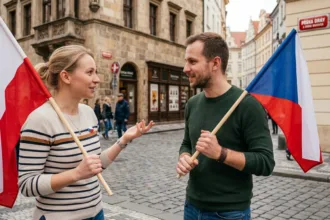
- The Leaders: Interestingly, Germany ranks slightly higher (worse) than its neighbor, the Czech Republic, Austria as well as Nordic countries like Finland. This suggests that while Germany is objectively safe, it faces slightly higher levels of internal tension or perceived instability than some of its more “quiet” neighbors.
2. Global Terrorism Index (GTI): A High-Risk Profile in Europe
A striking fact in the Global Terrorism Index is that Germany often has the worst score in Western and Central Europe. To an outside observer, this might be surprising, but it stems from several factors:
- High Target Profile: As a major political and economic leader in the EU and NATO, Germany is a high-profile target for various extremist groups.
- Incident Frequency: The GTI calculates scores based on the number of incidents, fatalities, and injuries over a five-year period. Germany has dealt with a higher frequency of thwarted plots and smaller-scale attacks compared to its immediate neighbors. As one of the Reddit users says “we had two major attacks on Christmas markets in Germany: Berlin 2016 and Magdeburg 2024 where the attackers drove into the crowd and killed people. In Berlin with a truck, in Magdeburg with a car.“
3. Subjective Safety: What Do Germans Actually Feel?
Data published by Tagesschau provides a fascinating look into the German psyche. Contrary to some alarmist headlines, the majority of Germans report that they generally feel safe in their daily lives. However, this feeling is highly situational.
- Where they feel safe: In their own neighborhoods, during the day, and in smaller towns.
- Where they feel uneasy: Public perception drops significantly in large city parks, around central train stations (Hauptbahnhof), and on public transport late at night.
- The Gender Gap: The research highlights a clear divide: women rate their sense of safety significantly lower than men, especially when walking alone after dark.
The Verdict for Travelers
Germany remains a safe destination for the vast majority of tourists. You are much more likely to lose your wallet to a pickpocket in Berlin than to be caught in a violent incident. However, the data shows that Germany is navigating a complex period.
Our advice: Enjoy the vibrant cities and beautiful landscapes, but exercise “city smarts” — be extra vigilant at major transport hubs and, if you are a solo female traveler, plan your late-night routes in advance to stick to well-lit, busy streets.
Sources: