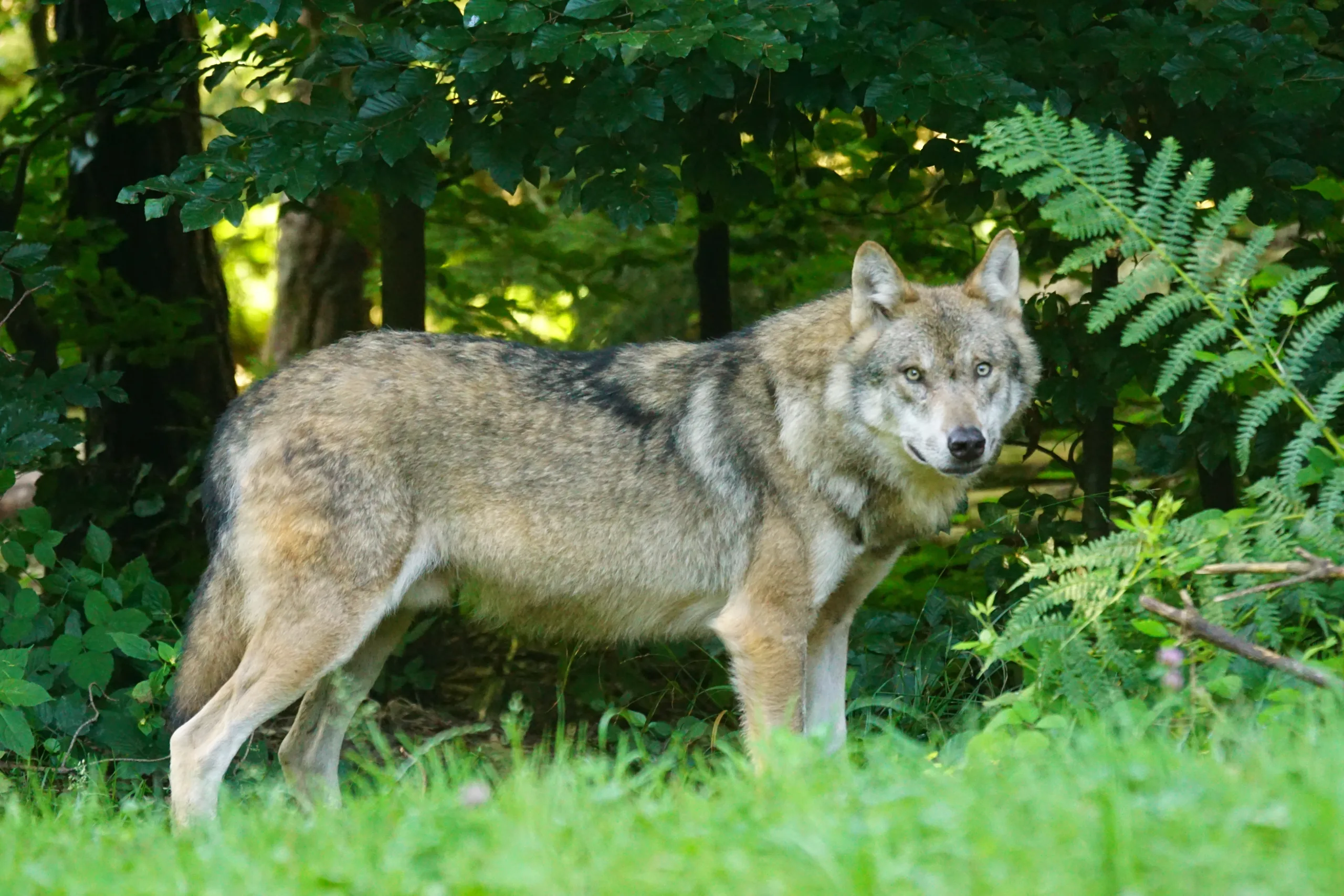
Wolves (Canis lupus) are making a remarkable comeback across Europe. Once nearly eradicated in many regions, they have returned to large parts of the continent. According to a recent study published in PLOS Sustainability and Transformation, the European wolf population reached over 21,500 individuals by 2022 – an increase of 58% over the past decade.
This recovery is one of Europe’s greatest conservation successes, especially considering the continent’s dense human population and heavily modified landscapes.
Countries in Europe with the Largest Wolf Populations
Wolves are not evenly distributed across Europe. Some countries host large, well-established populations, while others only have small or recently recolonized groups.
Countries with more than 1,000 wolves include:
- Spain
- Italy
- Germany
- Poland
- Romania
- Bulgaria
- Greece
These nations form the core of Europe’s wolf population. Large populations are particularly concentrated in:
- The Carpathian region (Romania, Poland, Slovakia)
- The Balkan region (Bulgaria, Greece, parts of the Western Balkans)
- The Iberian Peninsula (Spain)
- The Apennines and Alps (Italy and surrounding countries)
These areas provide suitable habitats such as forests, mountains, and relatively low human disturbance.
Countries in Europe with Smaller Wolf Populations
Some European countries have fewer than 100 wolves, often due to recent recolonization or active population management. These include:
- Austria
- Belgium
- Denmark
- Hungary
- Luxembourg
- Norway
- The Netherlands
In these regions, wolves are still expanding and are often closely monitored.
Permanent vs. Sporadic Presence of Wolves
The study includes a detailed map distinguishing between permanent and sporadic wolf presence:
- Permanent presence means stable, reproducing populations.
- Sporadic presence refers to occasional individuals, often dispersing wolves without established packs.
Central and Eastern Europe
Countries like Poland, Romania, Slovakia, and Bulgaria show large areas of permanent presence, especially in forested and mountainous regions such as the Carpathians and Balkans. Wolves are well established here and reproduce regularly.
Southern Europe
In Italy, wolves are permanently present in the Apennine Mountains and expanding into the Alps. Spain shows permanent populations mainly in the northwest, with more fragmented or sporadic presence elsewhere.
Western Europe
France and Germany illustrate ongoing recolonization:
- Germany has permanent populations in the eastern and northeastern regions, spreading westward.
- France has permanent wolves in the Alps, with sporadic presence spreading toward the Pyrenees and central regions.
Northern Europe
In Scandinavia (Sweden, Norway, Finland), wolves have permanent populations, but their range is more limited and tightly managed. Peripheral areas show sporadic occurrences.
Western Lowlands
Countries like Belgium and the Netherlands mostly show sporadic presence, with a few emerging permanent territories.
Where in Europe Wolves are Absent
Despite their recovery, wolves are still absent or locally extinct in some parts of Europe. The study notes that the only mainland European countries without wolf recolonization are microstates such as Monaco, San Marino, and the Vatican. Additionally, wolves remain absent from island regions like the British Isles.
A Continental Comeback
Overall, wolves are now present in nearly all mainland European countries, either permanently or sporadically. Their expansion demonstrates remarkable adaptability – they can survive not only in wilderness but also in landscapes shaped by agriculture, infrastructure, and human activity.
The 58% population increase over the last decade highlights a strong recovery trend. However, this success also brings challenges, including conflicts with livestock farming and the need for effective coexistence strategies.
Source: Continuing recovery of wolves in Europe, PLOS Sustainability and Transformation, 25.02.2025